Katharine Graham
All the President's MenKatharine Graham was the publisher of The Washington Post during its Watergate investigation, a role that put her at the junction of journalistic independence, editorial accountability, and political pressure. She asked Bob Woodward to explain the sources behind the paper’s reporting, challenged him over a damaging mistake, watched Richard Nixon accept responsibility on national television, and later received a direct appeal from the President’s chief of staff to stop publishing accounts critical of Nixon. Her significance lies not in a single intervention but in the way these encounters made the paper’s institutional responsibility personal: its publisher had to weigh what its reporters knew, how they knew it, and what the country stood to lose if the reporting—or the pressure against it—went unchecked.
Publisher and Custodian of the Paper
Graham’s authority came with a history. Her father, Eugene Meyer, bought The Washington Post in 1933. After her husband, Philip Graham, who had been the paper’s publisher, died by suicide in 1963, she assumed control. By the time the Watergate investigation put the paper in direct conflict with the White House, she was not a detached observer of its reporting. The newspaper, its reputation, and its decisions were hers to answer for.
That responsibility surfaced in the timing of a lunch with Woodward and Howard Simons. Simons explained that Graham wanted to review some of the Watergate stories and ask about their sources. Woodward was relieved that she had waited until after a particularly intense run of investigative reporting and the White House’s attacks in the fall before calling the meeting. The delay did not make the questions less serious; it meant that, when they came, the editors and reporters had to account for work that had already altered the public argument over Watergate.
Sources, Verification, and a Reporter’s Mistake
The lunch was a confidential discussion of the sources behind the stories. Woodward described people by the positions they held, including a Florida official, Justice Department attorneys, an FBI agent, a White House aide, the Bookkeeper, and Hugh Sloan. Graham was less interested in the names than in those positions. Her questions focused on how the reporting was supported and where its information came from, rather than treating source disclosure as an end in itself.
Woodward also told her that he had not told anyone the identity of Deep Throat. Graham paused and asked him to tell her. The passage records the request, not whether he answered it. The exchange nevertheless captures the tension in her role: the publisher sought a fuller account of an extraordinary investigation, while the reporter guarded a confidential source whose identity he had kept from others.
The Haldeman story brought that scrutiny to a sharper point. Woodward explained the mistake he and Carl Bernstein had made concerning Sloan’s grand-jury testimony. Graham pressed him: “But are you absolutely sure we’re right?” She recalled Henry Kissinger saying that the reporters were wrong about Haldeman and describing the coverage as terribly unfair. Woodward replied that Haldeman was the person least wronged by the reporting, a firm answer that reassured Graham. She told him, “You’ve reassured me. You really have.” Her relief was qualified by a final look that carried the demand to do better. The scene makes accuracy part of her defense of the investigation, not an obstacle to it: the paper had to pursue consequential allegations while remaining answerable for its errors.
Witness to Nixon’s Public Reckoning
Graham was with Woodward and Simons when they watched Nixon address the nation on network television. Nixon announced that he had accepted the resignations of H. R. Haldeman and John Ehrlichman, said that responsibility belonged at the top, and praised the grand jury, prosecutors, Judge John Sirica, and a vigorous free press for bringing facts to light. Graham reacted with alarm: “Oh, my God,” she said. “This is too much.”
Her response came as the President publicly acknowledged responsibility and invoked the press as part of the system that had exposed the facts. For Graham, the speech followed months in which the White House had attacked the paper’s credibility. Its rhetoric therefore had an immediate institutional meaning: the reporting being denounced as partisan or unreliable was also, in Nixon’s own account, part of the process that had brought the crisis into view. Graham did not deliver a public rejoinder in this scene; her presence beside the reporters made her a witness to the stakes of the work she had asked them to defend.
The Stakes Extend Beyond the Newsroom
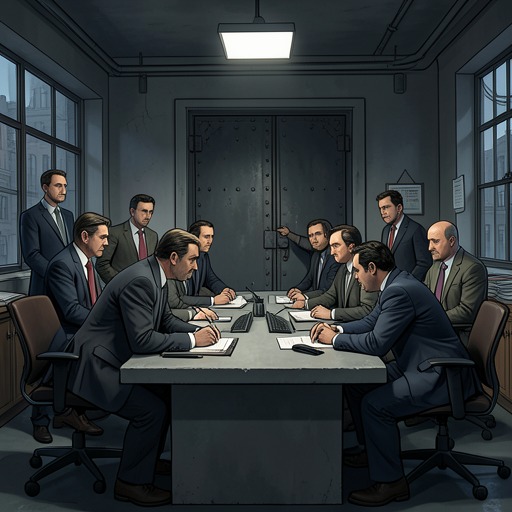
A later late-night meeting brought the issue into Graham’s own yard. After Bob Woodward and Carl Bernstein relayed statements from Deep Throat, Bernstein proposed organizing reporters to check each item in the memo, while Woodward suggested hiring private detectives. Graham was skeptical but shaken. She told them that the problem was no longer merely journalistic and raised the state and future of the country. She promised to call a meeting of key editors and reporters the next morning. The journalists stayed with her in the yard until four in the morning, reviewing what they had heard; the evidence does not establish what Graham ultimately thought of the visit, but it shows that she treated the information as requiring an organized response.
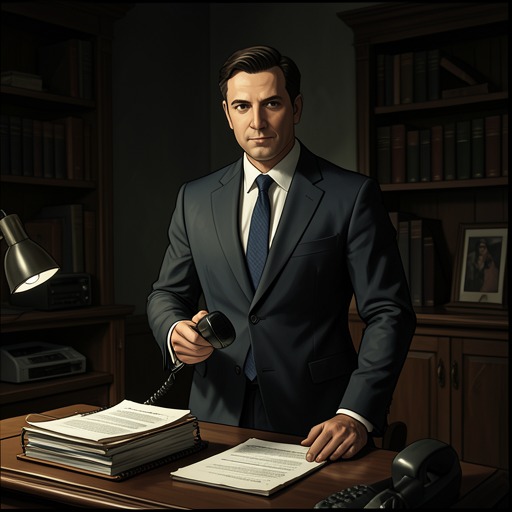
By December, the pressure reached her directly. General Alexander Haig telephoned Graham from San Clemente while she was at a Washington restaurant, objecting to two Post stories. One reported that Nixon’s Operation Candor had been shut down and that two trusted advisers who had defended him no longer believed in his innocence. The other said that the President’s lawyers had supplied attorneys for Haldeman and Ehrlichman with copies of documents and other evidence submitted to the special prosecutor. Haig called the stories “scurrilous,” accused the paper of a “disservice” to the nation, and appealed to Graham to stop publishing such accounts.
The call was part of a wider effort to shape what the public would hear, but the relevant facts sharpened its significance: Haig himself had come to doubt Nixon’s course, while Nixon continued to work in concert with the former aides who were central targets of the investigation. Graham thus confronted more than a complaint about two headlines. A senior White House official was asking the publisher to restrain coverage while the administration’s own approach to the investigation remained in dispute. Across the story, Graham’s conduct is defined by that unresolved obligation: to demand proof from her reporters, to recognize the national consequences of their work, and to face pressure from the highest levels without treating the request to stop as a substitute for examining the evidence.